Land Development
How does intended use change where I should look for land around Oklahoma City?
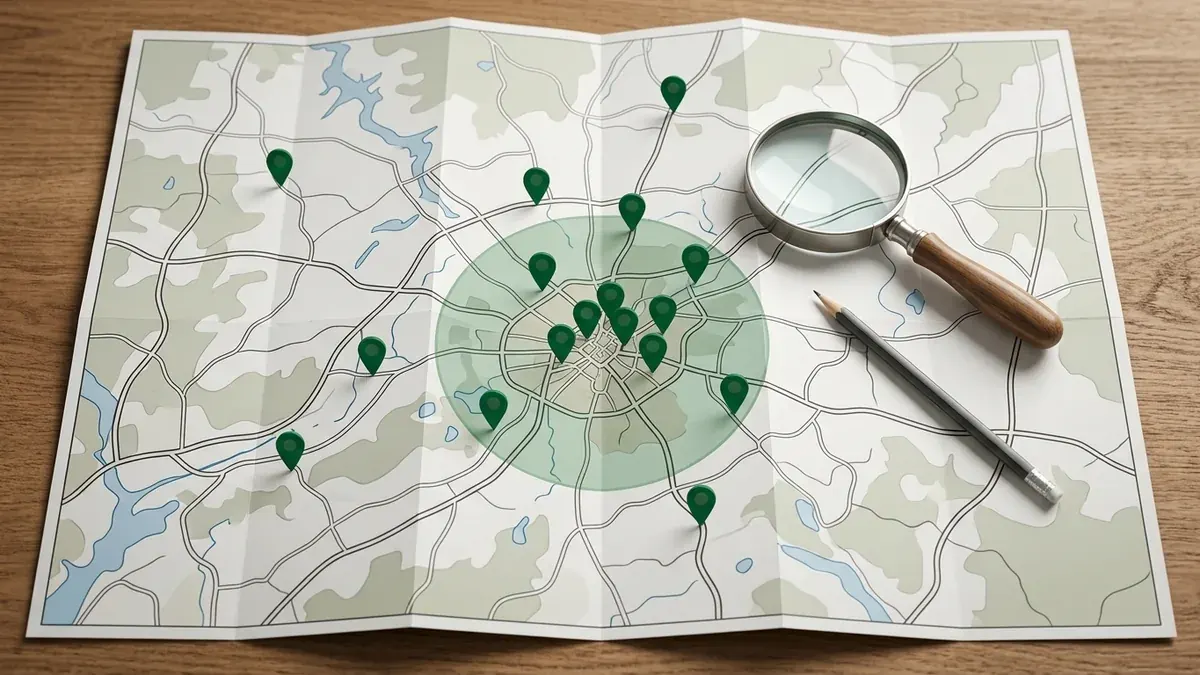
Your intended use should decide where you look for land around Oklahoma City, not the other way around. A homesite, a working acreage, a long-term hold and a commercial or development parcel each point to different parts of the metro and different tradeoffs. Settle the use first and the search area narrows on its own.
On this page
- Decide the use before you decide the place
- A homesite leans toward services and commute
- A working acreage leans toward space and rules
- A long-term hold leans toward the path of growth
- Compare the uses side by side
- Commercial and development parcels lean toward infrastructure
- Turn your use into a search plan
Decide the use before you decide the place
The right location for land around Oklahoma City depends almost entirely on what you plan to do with it once you own it. Buyers who start with a favorite town and work backward often end up with a parcel that fights their plan at every step. Buyers who start with the use tend to search a smaller area, ask sharper questions and waste far less time.
Intended use sets the requirements that actually matter: how much road frontage you need, which utilities are essential on day one, what the zoning must allow and how close you need to be to jobs, customers or services. Once those requirements are written down, whole parts of the metro drop out of the search on their own. What remains is a list you can actually tour.
The Oklahoma City Metro stretches from infill lots inside the city to open acreage past Piedmont, Yukon, Choctaw and Nicoma Park, with suburban parcels around Edmond, Moore and Norman in between. That range is an advantage only if you have a reliable way to sort it. Your intended use is that sorting tool, and the rest of this article works through the main cases one at a time.
A homesite leans toward services and commute
If you are buying land to build a home, daily life should drive the location decision more than the view or the price per acre. You will care about the drive to work, the distance to groceries and medical care, and whether the address falls inside a city, a suburb or an unincorporated area. Each of those affects permits, utilities and the services you receive after you move in.
Inside Oklahoma City, Edmond, Moore or Norman, a buildable lot usually comes with city water and sewer and a clear permitting path, but you trade that convenience for less space and closer neighbors. Farther out, near Piedmont or Bethany, lots may offer more room and quieter roads while depending on a rural water district, a private well or a septic system. Neither choice is wrong, but they are different projects.
Ask yourself how much of your total budget can go toward site work rather than the house itself. A remote lot with a low asking price can cost more in the end once you add a well, a septic system, a long driveway and a longer run for electric service. Compare the total cost to build on each parcel, not just the price of the dirt.
A working acreage leans toward space and rules
Buyers who want animals, a shop, a large garden or room to store equipment need land where those activities are both allowed and practical. That usually points toward unincorporated county land or communities with agricultural or large-lot zoning, and it points away from most subdivisions. Confirm what the classification and any recorded covenants permit before you fall for the view from the gate.
Space also changes the utility conversation in ways a homesite buyer never faces. Water for livestock, three-phase power for a shop and access for trailers or delivery trucks all become practical questions with real costs attached. Ask the county and each utility provider what exists at the property today and what it would take to add what you need.
Road type matters more on acreage than most buyers expect, because you will use that road with heavier loads in worse weather. A paved county road, a gravel road and a private easement each behave differently after a storm and each affects deliveries, school buses and emergency access. Drive the route in more than one condition before you decide the location works.
A long-term hold leans toward the path of growth
If you are buying land to hold rather than to use right away, the location logic shifts toward where the metro appears to be expanding and what public infrastructure is planned nearby. Nobody can promise where growth will land or when, and this article does not try to. You can still ask much better questions about direction, timing and what the land will cost you while you wait.
- Ask the city or county planning office what road, water and sewer projects are funded nearby.
- Look at the comprehensive plan to see how the area is designated for future land use.
- Check whether annexation or a change in jurisdiction is under discussion for the area.
- Estimate the carrying cost of taxes, insurance and maintenance for the years you plan to hold.
A hold only works if you can afford to wait without pressure to sell at the wrong moment. Treat the carrying cost as part of the purchase price and compare parcels on that combined number rather than the asking price alone. Never assume appreciation will cover those costs, because no one can guarantee that outcome for any parcel.
Compare the uses side by side
The table below summarizes how each intended use tends to shift a land search across the Oklahoma City Metro, and what deserves your first phone call in each case. It is a starting point for conversation, not a rule that applies to every parcel. Your specific plan, budget and timeline may move a property from one row to another.
| Intended use | Where the search tends to point | What to verify first |
|---|---|---|
| Homesite for your family | Lots with city services or nearby suburbs | Utilities, permits and commute |
| Working acreage or hobby farm | County land or large-lot communities | Zoning, water and road access |
| Long-term investment hold | Areas with planned infrastructure | Carrying cost and future land use plan |
| Commercial pad or business site | Corridors with traffic and visibility | Zoning, curb cuts and utility capacity |
| Residential development parcel | Edges of growing communities | Sewer capacity and platting process |
Notice that the verification column changes more than the location column does. Two buyers can look at the same acreage outside Yukon and need completely different answers from completely different offices. Bring your intended use to every conversation with a planner, a utility provider or a surveyor so they can answer the question you are actually asking.
Commercial and development parcels lean toward infrastructure
Commercial land lives or dies on traffic, visibility, access and utility capacity, and those features are expensive to add after the fact. A corner along a busy corridor in Oklahoma City or Edmond may carry a higher price because those features already exist and have been permitted. A cheaper parcel a mile away may need a curb cut, a turn lane or a sewer extension that you would pay for.
Residential development parcels add platting, drainage design and sewer capacity to the list of things that must work before a single lot can be sold. Ask the city engineer or the county what capacity exists today and what off-site improvements a plat would trigger. Those answers often decide whether a parcel is a development site or just a large and pleasant field.
Turn your use into a search plan
Write a one-page brief before you start touring land, and keep it in the truck. It should state the intended use, the essential utilities, the acceptable road types, the jurisdictions you will consider and the total budget including site work and professional reports. Share it with everyone who helps you look, so every parcel gets measured against the same standard.
- List the deal-breakers first, since they eliminate parcels faster than preferences do.
- Name the communities you are open to and the ones you are not, with the reason.
- Set a total-cost budget that includes utilities, access, permits and professional reports.
- Decide how long you can carry the land before it must start serving its purpose.
Ernie deBernard works across residential, land, commercial and investment property throughout the Oklahoma City Metro with McGraw REALTORS®. If you can describe what the land needs to do for you and roughly when, that brief is the most useful thing you can bring to a first conversation. The search area, and the short list of parcels worth a drive, usually follow from it.
This article is general information for people comparing land across the Oklahoma City Metro. It is not legal, tax, financial, zoning or engineering advice, so confirm current details with the relevant city or county office or a licensed professional before you act.

Written by